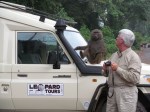
After a great introduction to a safari at Lake Manyara we jumped into what has to be the quintessential safari destination, the Serengeti. When first planning our trip to Tanzania we were looking at the three day safari as it was cheaper and easier to get the time off. Luckily Kate put her foot down and stated if we were going to do a safari in eastern Africa the Serengeti was a must. We started the day with a quick stop at the Ngorongoro Crater Conservation Area to pay the entrance fee. The crater rim is the gateway into the way to the Serengeti. While waiting for Swai to take care of the fees and permits we watched a colorful school bus arrive. Instead of the boring beeping sound we are accustomed to in the US this vehicle reversed to the tune of Mozart’s Fur Elise. After parking the bus a baboon quickly jumped into the passenger window only to be greeted by shrieking children. On seeing this someone in the parking lot immediately ripped the baboon out of the bus by its neck and delivered a quick blow to the head. It was now clear why Swai made us close the windows and lock the doors.
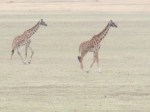
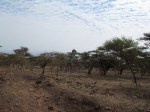
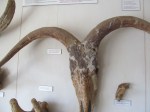
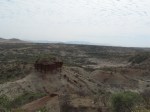
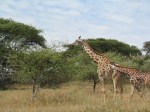
We then got back in the land cruiser and drove along the crater rim, unfortunately the cloud cover prohibited any decent views. After dropping down off the crater we drove through the rapidly browning plains dotted with Maasai, their livestock and giraffe, Kate was in heaven. About halfway between the crater and the Serengeti we stopped at Olduvai Gorge. Olduvai Gorge is known as the cradle of mankind. Over the last 100 years the site has been extensively explored and provided fossil records ranging from Homo habilis some 1.9 millions years ago up to Homo erectus from 1.2 million years before present. Much of this work was done by German scientists Louis and Mary Leakey. In addition to fossils, ancient footprints were found in this region. These Australopithecus afarensis tracks are thought to be from around the same time (~3.5 million years previous) as “Lucy” who was discovered in Ethiopia. We also learned Olduvai is named after the Aloe looking Oldupai plant found throughout the region which is utilized for water, medicinal qualities, and its fibers. Kate, ever the teacher, was dutifully taking notes and photos to bring back to her students. On the way out of Olduvai we also saw the Maasai guard napping behind the gate but he looked to be a ways past sleeping. Thanks to Wikipedia for refreshing our memories us on some of the Olduvai details.
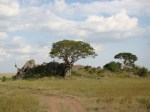
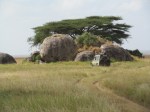
We then got back onto the rough road and drove into the Serengeti. After entering the park we had a lovely lunch of Pringles and Coke before walking the short loop around one of one of the many Kopjes in the Serengeti. Kopjes are rock outcroppings interspersed across the Serengeti providing a different microhabitat for plants and animals. It was nice walking around as we would not be able to do much walking while actually in the Serengeti, Swai said it had something to do with large predators, who really knows. We then got back in the land cruiser and drove all afternoon. At just over 5700 square miles Serengeti is slightly larger than the state of Connecticut and is simply breathtaking.
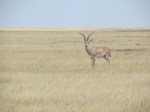
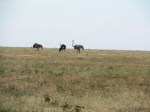
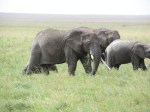
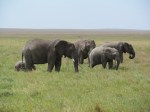
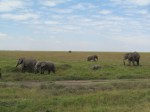
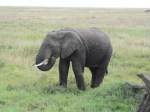
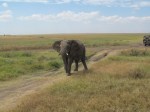
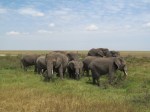
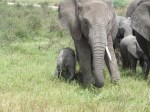
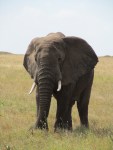
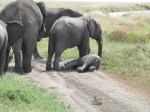
Within minutes of entering the park we saw Ostrich and numerous Gazelle. We learned that the female gazelles tend to stay in a herd with one male watching over them. You can imagine the jokes that were made in a car of four males and one female. We then drove up into a herd of elephant. While watching the herd walk past our vehicle on either side we noticed more large elephants coming from behind the low rolling hills in the distance. One elephant began trumpeting and running towards the jeep causing us to back up. About 1 hour into the park point the Serengeti had already exceeded our expectations.
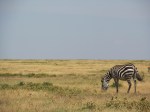
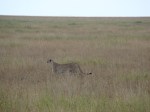
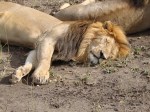
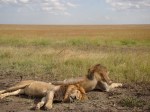
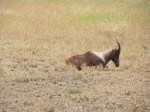
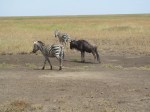
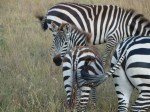
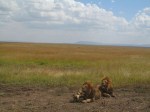
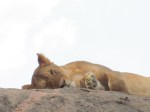
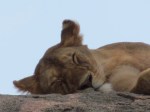
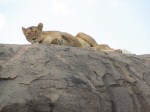
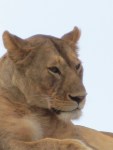
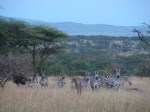
Of the numerous other animal sightings we had, some stood out. We drove upon two male lions “cat napping” on the road after having eaten a wildebeest. There were a group of lionesses napping on top of a kopje further along. Closer to dusk, we watched a cheetah unsuccessfully, yet magnificently hunt some Thompson Gazelle. Although we missed the rainy season and the large migrations by a few weeks, we saw hundreds of zebra, gazelles, and wildebeest along the plains. We also watched jackals, some kudu and topi (in the antelope family). Along with the wildlife, we saw many birds including vultures, Fischer’s love birds, guinea fowl, and secretary birds. As far as plants, the iconic flat top acacia and the comically large fruit of the sausage trees stood out. And of course, we saw the elusive hat beast. We learned a few days later that this was something lost in translation and was actually a hartebeest. We like to think the hat beast is still out there. You might even see some pictures of one.
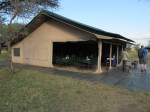
A full day in the Serengeti and the excitement was not yet over. At the wildcamp there are a handful of tents, all Harry Potter style. They included two double beds, a sink and mirror, toilet, and shower. The yard around the camp was filled with wildebeest and zebra – and no fence. We enjoyed a beer with the sunset and wildlife, then an amazing dinner in the dining tent. At night, we were lulled to sleep by the wildebeest grunts, zebra, and crickets. There was the occasional hyena and Andy claims he heard a lion, but this may have been Kate snoring.
























































 emma jean jones